If you live in Winchester, you know the drill. One week, it’s a beautiful, crisp Shenandoah Valley morning, and the next, we’re staring down a humid heatwave that makes the grass crunch underfoot.
Between the unpredictable weather and that stubborn, heavy clay soil we all love to hate, keeping a yard looking “magazine-ready” can feel like a full-time job.
But here’s the thing: your yard should be a place where you drink your morning coffee, not a place where you spend every Saturday morning wrestling with a hedge trimmer.
At Morrisons Lawn Care LLC, we’ve spent years getting our hands dirty in local soil. We’ve seen what thrives and what withers.
The secret to a beautiful landscape isn’t more work—it’s smarter choices. By focusing on low-maintenance plants for Winchester, VA, you can build a sustainable, “set-it-and-forget-it” garden that looks professional year-round.
Understanding the Winchester “Dirt” and Climate
Before we talk plants, we have to talk about home base. Winchester sits in USDA Hardiness Zone 7a/6b. We get cold winters, but our summers are the real test. Most of our local yards sit on a limestone base with clay soil.
Clay is a bit of a double-edged sword. It’s rich in nutrients, but it’s dense. It holds water like a sponge in the spring (leading to root rot) and turns into a sun-baked brick in July.
To find the best plants for low-maintenance landscaping in VA, you need varieties that are soil-adaptable and drought-resistant.
1. The Heavy Hitters: Low-Maintenance Flowering Perennials
Perennials are the gift that keeps on giving. Unlike annuals, which you have to replant every Mother’s Day, these hardy plants for Shenandoah Valley gardens go dormant in the winter and come back stronger every spring.
Black-Eyed Susans (Rudbeckia fulgida)
If there were a mascot for low-maintenance landscaping in Virginia, this would be it. These are iconic native Virginia plants.
They don’t mind the clay, they laugh at the heat, and they provide a massive splash of gold from mid-summer all the way into the fall.
- Maintenance Level: Near zero. Just cut them back in late winter.
- Bonus: They are excellent pollinator-friendly garden plants, attracting butterflies and goldfinches.
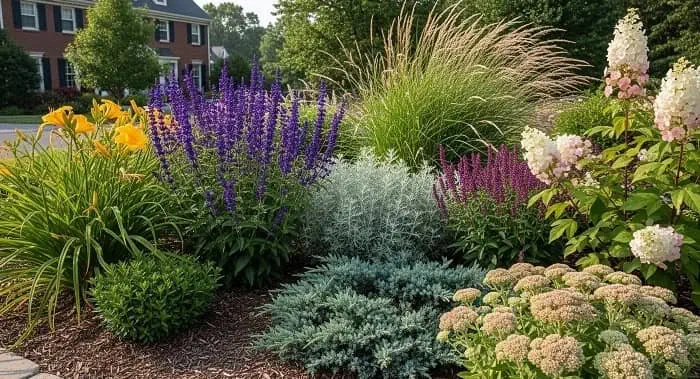
Purple Coneflower (Echinacea)
If you’re looking for drought-tolerant plants for Winchester, VA, the Coneflower is a warrior. With deep taproots that hunt for moisture deep in the soil, they can survive weeks without rain. They come in stunning purples, whites, and oranges.
- Maintenance Level: Very low. They actually prefer to be left alone.
- Landscape Tip: Leave the seed heads on in the winter; they look beautiful in the snow and feed the local birds.
Catmint (Nepeta)
Don’t confuse this with catnip! Catmint is a “pro-level” secret for an easy-care Virginia yard. It creates a soft, mounded cloud of purple flowers that lasts for months.
- Why it works: It’s one of the best deer-resistant landscape plants because the scent (which humans find pleasant and minty) drives deer away.
Evergreen Foundation Plants: Year-Round Structure
Nobody wants a yard that looks “dead” for five months of the year. Evergreen foundation plants provide the skeleton of your landscape.
The goal here is to find low-pruning landscape shrubs—plants that stay compact, so you aren’t out there with shears every three weeks.
‘Green Velvet’ Boxwood
Classic, clean, and sophisticated. The ‘Green Velvet’ variety is particularly well-suited for our area because it maintains its rich green color even in a harsh Shenandoah winter.
- Maintenance: It grows slowly, meaning you’ll only need to touch it up once a year at most.
Winterberry (Ilex verticillata)
While technically a deciduous holly (it loses its leaves), it earns its spot here for its winter “pop.” In the dead of January, this plant is covered in bright red berries.
- The “Low-Maintenance” Factor: It is incredibly clay soil-tolerant and loves the damp spots in the yard where other plants might struggle.
Juniper ‘Blue Star’
If you want a shade-tolerant shrub (or at least one that handles partial sun), this low-growing evergreen offers a stunning silvery-blue hue. It’s a great way to add color without needing flowers.
Native Grasses and Sustainable Design
The modern Winchester yard is moving away from perfectly manicured (and thirsty) turf grass toward sustainable landscape design. Native plant varieties like ornamental grasses add movement and texture.
- Little Bluestem: A native grass that turns a gorgeous reddish-bronze in the fall. It’s a water-efficient garden plant that actually prefers “poor” soil.
- Switchgrass (‘Shenandoah’): Named after our very own valley, this grass is tough as nails. It handles the wind, the clay, and the heat without flopping over.
Ground Covers: Nature’s Mulch
Weeding is everyone’s least favorite chore. Ground cover plants for erosion control and weed suppression are the ultimate hack for a low-maintenance yard.
| Plant | Best For… | Why We Love It |
| Creeping Phlox | Slopes and Rock Walls | Creates a “carpet” of flowers in spring; clay-tolerant. |
| Stonecrop (Sedum) | Sun-baked areas | Literally impossible to kill by underwatering; drought-resistant. |
| Pachysandra | Deep Shade | The perfect shade-tolerant solution for under large oak trees. |
The “Winchester Strategy”: 3 Tips for a Self-Sustaining Yard
Even the best hardy plants for Virginia need a little help getting started. To truly achieve a minimal watering requirement landscape, follow these three steps:
1. Mulch Like You Mean It
In the Shenandoah Valley, mulch isn’t just for looks. A 3-inch layer of hardwood mulch acts as a blanket for your plants’ roots. It keeps the clay from cracking in the sun and holds in every drop of rainwater.
2. Group by “Hydro-Zoning.”
Don’t plant a thirsty Hydrangea right next to a drought-hardy Lavender. Put your water-efficient garden plants together so you aren’t wasting the hose on plants that don’t need it.
3. Focus on Soil Adaptability
When you first plant, mix a little organic compost into your clay. It breaks up the “brick” and gives those perennial garden plants a chance to spread their roots. Once they are established (usually after the first year), they’ll take it from there.
Why Choose Native?
When we talk about native Virginia plants, we aren’t just being eco-friendly. We’re being practical.
Native plants have spent thousands of years adapting to Winchester’s specific “vibes.” They know how to handle a late spring frost or a July dry spell. By choosing natives, you are naturally opting for low-maintenance landscaping plants.
Let Morrisons Lawn Care LLC Do the Heavy Lifting
We know that even low lawn maintenance requires an initial investment of time and muscle. Digging in Winchester clay isn’t exactly a spa day.
Whether you want a full sustainable landscape design overhaul or just need help selecting the right evergreen foundation plants for your front porch, Morrisons Lawn Care LLC is your local partner.
We live here, we work here, and we know exactly what it takes to make a Winchester yard thrive with minimal effort.