
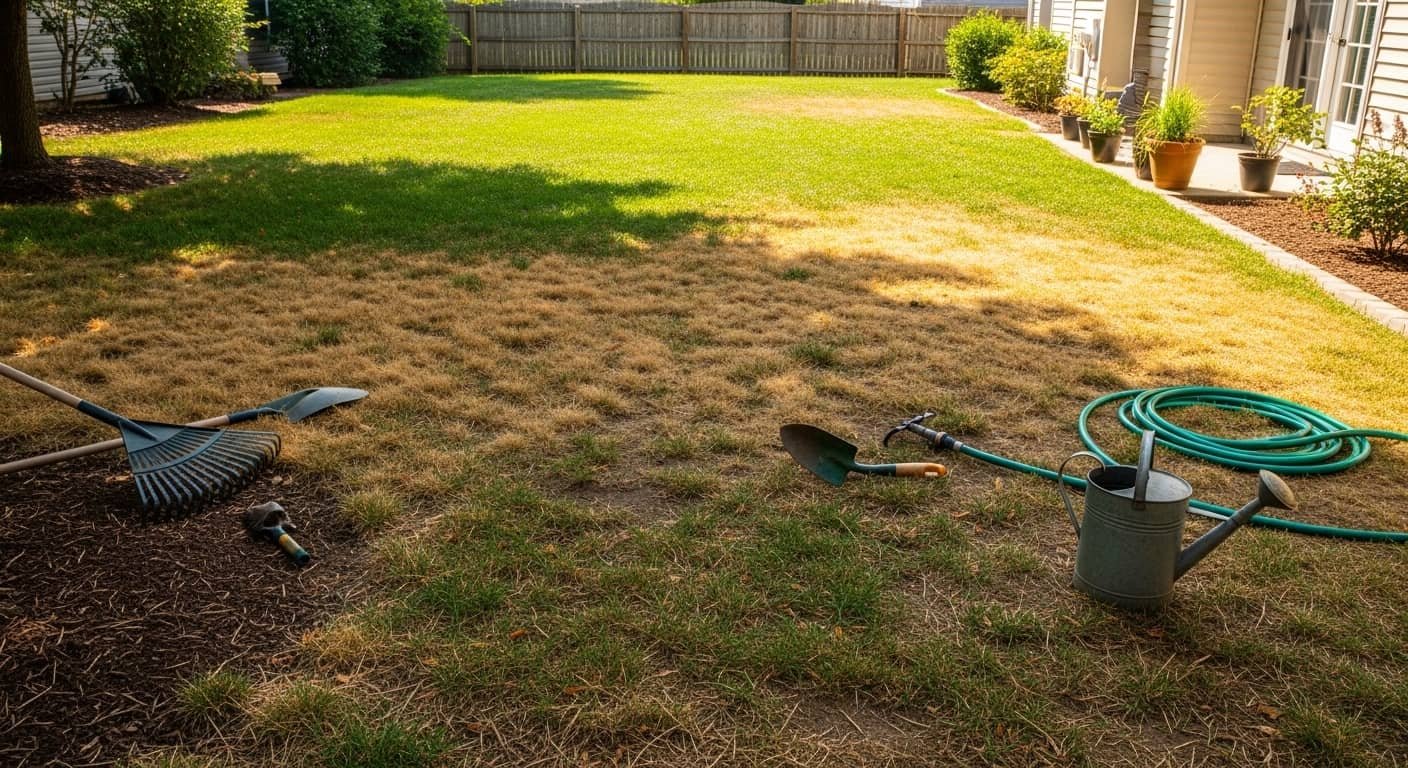
Understanding Brown Grass Winchester VA Lawns
A lush green lawn is something every homeowner wants, but many residents notice patches of brown grass during different times of the year. Brown grass Winchester VA lawns often appear because of weather stress, soil issues, pests, or improper lawn care practices. The climate in Winchester can sometimes create conditions that make grass dry out or lose its healthy color.
Understanding the causes of brown grass Winchester VA homeowners commonly face is the first step toward restoring a vibrant lawn. With the right lawn care techniques, proper watering, and timely treatment, it is possible to bring damaged grass back to life and maintain a greener, healthier yard throughout the seasons.
If you live in the Shenandoah Valley, you know the “August Golden Rule”: If you aren’t watering like it’s your second job, your lawn is probably starting to look like a shredded wheat biscuit.
At Morrisons Lawn Care LLC, we see it every year. Around late June, the vibrant Emerald City we call Winchester starts to fade into a dusty tan. It’s frustrating, especially when you’re trying to keep up with HOA lawn appearance standards or just want a nice place for the kids to run around barefoot.
But here’s the secret: brown grass isn’t always dead grass. In Virginia, our lawns are fighting a multi-front war against heat, humidity, and some very hungry local pests. Let’s break down exactly what’s happening beneath your boots and how we can get your green back.
Understanding Brown Grass Winchester VA Lawns and Turf Dormancy
The most important thing to understand about Tall Fescue lawn care in Virginia is that these grasses are actually “cool-season” species.
They are at their happiest when the air is 70°F and the rain is steady. When Winchester hits those 90-degree streaks with 80% humidity, the grass gets stressed.
Is it Dead or Just Sleeping?
To protect itself, your grass enters turf dormancy in summer. Think of it like a bear hibernating. The plant shuts down the green blades (which require a lot of energy and water to maintain) and sends all its remaining nutrients down into the crown and roots.
- The Tug Test: Go out to a brown patch and give the grass a gentle tug. If it resists and feels firmly rooted, it’s dormant. If it pulls out like a loose wig, you’re likely dealing with root system dehydration or a pest issue.
Heat stress lawn treatment for dormant grass isn’t about dumping chemicals on it; it’s about keeping the “crown” (the base of the plant) alive until the cooler temperatures of September arrive.
Brown Grass Winchester VA: The Winchester Soil Struggle with Clay and Compaction
If you’ve ever tried to dig a hole in your backyard here, you know we deal with heavy, red clay soil drainage issues.
Clay is a double-edged sword. It holds onto nutrients well, but it compacts easily. When the sun beats down on Winchester lawns, that clay bakes into a brick.
This leads to compacted soil stress, where water simply runs off the surface into the street instead of soaking down to the roots.
Why Aeration is Your Best Friend
This is why we advocate for lawn aeration before the heat season. By pulling small cores of soil out of the ground, we create “tunnels” for oxygen and water to reach the root zone.
If your lawn is currently brown and the ground feels like concrete, you’re seeing the effects of a “suffocating” root system.
Brown Grass Winchester VA: The Watering Maze — Are You Killing Your Lawn with Kindness?
Most people see brown grass and immediately crank the sprinkler to “monsoon” mode. This often leads to a soil moisture imbalance.
Overwatering vs. Underwatering
In the Shenandoah Valley, overwatering can actually be more dangerous than a drought. Because our humidity is so high, keeping the grass blades wet 24/7 is an open invitation for humidity-related turf diseases.
- The Underwatering Sign: The grass takes on a bluish-gray tint, and your footprints stay visible in the grass long after you’ve walked across it.
- The Overwatering Sign: The ground feels “squishy,” and you might notice a yellowing of the blades rather than a browning.
Sustainable watering practices suggest one deep soak (about an inch of water) once or twice a week, ideally between 4:00 AM and 8:00 AM. This allows the water to soak in before the sun evaporates it, but gives the blades time to dry off during the day so fungus doesn’t move in.
The “Brown Patch” Mystery: When It’s Not the Heat
Sometimes you’re doing everything right—watering correctly and mowing high—and you still see brown lawn spots. In Winchester, this is often brown patch fungus (Rhizoctonia).
Because of our Shenandoah Valley summer climate, we get “warm nights and wet leaves.” If the temperature stays above 65°F at night and there is moisture on the grass, fungus spreads like wildfire.
Symptoms to Watch For:
- Circular patches that look like they’ve been “thinned out.”
- A dark, “greasy” ring around the edge of the brown circle.
- Lesions on the grass blades that look like tan butter knives with dark borders.
If you see these, you need a professional lawn fungus treatment near you. Standard watering won’t fix a fungus; in fact, it will make it worse.
Below the Surface: The Grub Problem
If your grass is turning brown in irregular shapes and you notice more birds or skunks digging in your yard than usual, you might have a lawn grub infestation.
Grubs are the larvae of beetles (like Japanese Beetles). they live in the soil and chew through the root system. Since the grass no longer has “straws” to drink water with, it turns brown and dies.
The Test: Peel back a 1-square-foot section of the brown turf. If you see more than 5 or 6 white, C-shaped larvae, it’s time for a targeted treatment.
The “Quick Fix” Trap: Fertilizer Burn
We get it—you want the greenest lawn on the block. But applying heavy nitrogen fertilizer in the middle of a July heatwave is like giving a marathon runner a Thanksgiving dinner in the middle of a race.
Fertilizer burn damage happens when the salts in the fertilizer suck the moisture out of the grass blades. If you see bright yellow or brown streaks that follow the exact path of your spreader, you’ve overdone it. During the summer, it’s best to lean on organic matter or slow-release nutrients, or better yet, wait for the early fall lawn recovery strategy.
Brown Grass Winchester VA: A Step-by-Step Recovery Plan
If your lawn looks like a desert right now, don’t give up. Here is the drought-damaged grass recovery plan we use at Morrisons:
Step 1: Raise the Blade
Stop scalping your lawn! Set your mower to its highest setting (4 inches). This provides shade to the soil, keeps the roots cooler, and helps the grass retain moisture.
Step 2: Hydrate Strategically
Instead of watering for 10 minutes every day, water for 45 minutes twice a week. We want the water to go deep, forcing the roots to grow downward to find it.
Step 3: Identify the Enemy
Is it heat? Is it grubs? Is it fungus? If you aren’t sure, call in a pro. Applying the wrong summer lawn damage repair can be an expensive mistake.
Step 4: Prepare for Fall
Fall is the “New Year” for Virginia lawns. This is when we perform aeration, overseeding, and nutrient boosting to ensure that next summer, your lawn has a deep, resilient root system that can handle the heat.
Brown Grass Winchester VA: The Morrisons Difference in Local Lawn Care
At Morrisons Lawn Care LLC, we aren’t a national franchise using a “one-size-fits-all” chemical spray. We live here. We know the Winchester soil, we know the weather patterns of the valley, and we know exactly what Kentucky Bluegrass heat sensitivity looks like.
We believe in sustainable watering practices and long-term soil health. A brown lawn isn’t a failure—it’s just a sign that your grass is working hard to survive. Our job is to give it the tools it needs to thrive.
Ready to Turn Your Lawn Around?
Don’t spend another weekend dragging a hose around only to see more brown spots guide. Let the experts at Morrisons Lawn Care LLC diagnose your yard and create a custom plan to bring it back to life.
Would you like me to come out for a free summer health assessment? Whether you’re dealing with brown patch, grubs, or just Winchester heat stress, we have the solution.
Contact us today and let’s get your lawn back on track!